Safety
Six electrical safety compliance rules for Indian factories
CEA safety regulations, earthing, periodic audits, authorised persons and statutory approvals every factory manager should know.
Kishan Savaliya
6 min read
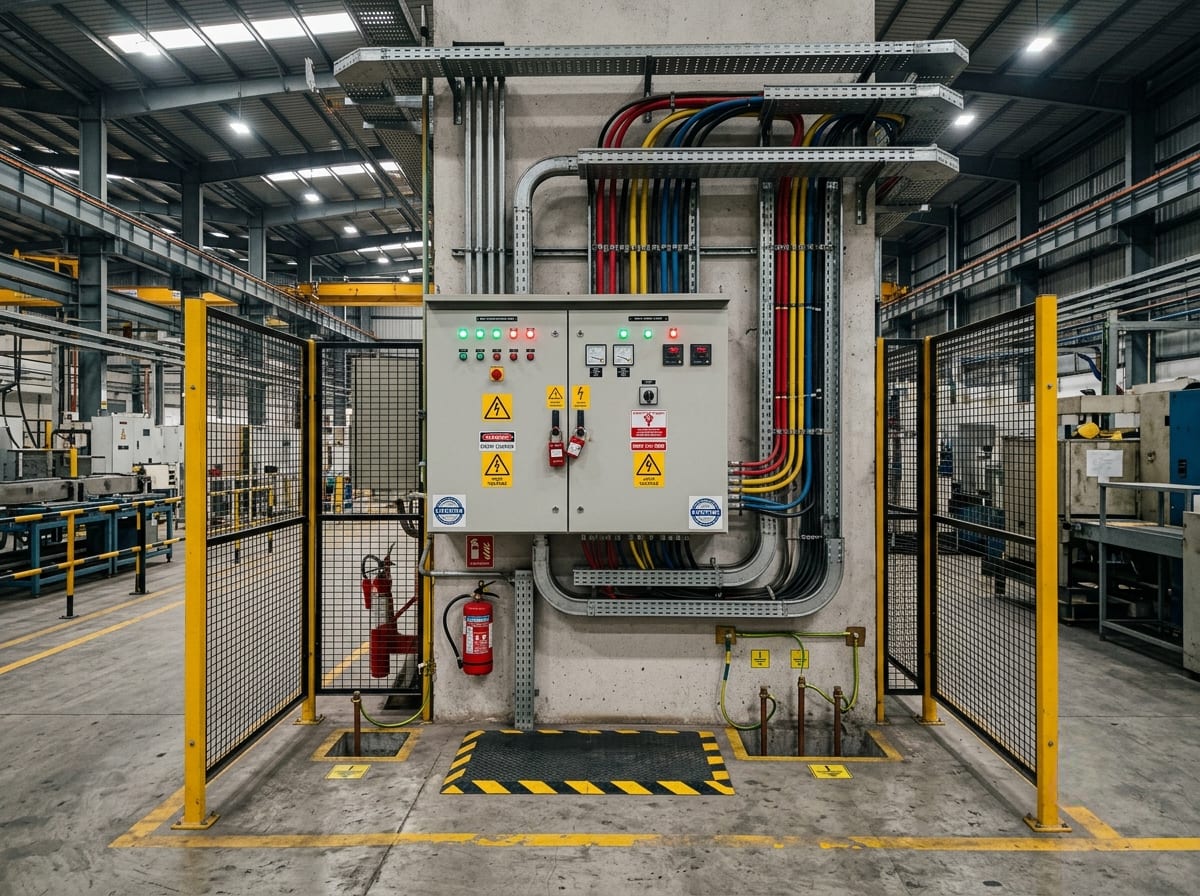
Electrical accidents are among the most serious, and most preventable, hazards in any factory. Beyond the human cost, non-compliance exposes a business to statutory penalties, insurance disputes, and shutdowns. For a factory manager, electrical safety compliance is not optional paperwork; it is a legal and operational duty. These six rules form the backbone of a compliant, safe industrial electrical environment in India.
Rule 1: Comply with the CEA Safety Regulations
The CEA (Measures relating to Safety and Electric Supply) Regulations set the baseline legal requirements for electrical installations, construction, operation, and maintenance. Every factory's electrical system must conform, and managers should ensure their installations are designed and operated to the current edition.
Rule 2: Earthing & Protective Devices Are Non-Negotiable
- Proper earthing: every installation needs a sound, tested earthing system to carry fault current safely and keep touch potentials within limits.
- Protection: appropriate breakers, RCDs/ELCBs, and correctly set protection guard against shock and fire.
Rule 3: Conduct Periodic Electrical Safety Audits
Regular, independent electrical safety audits identify deteriorating insulation, loose connections, overloaded circuits, and non-compliances before they cause incidents. Many insurers and statutory frameworks expect periodic audits, and they are among the cheapest risk-reduction measures available.
Rule 4: Use Only Authorised, Competent Persons
Work on electrical systems must be done by suitably qualified and, where required, licensed electrical personnel. Maintaining records of competency and authorisation protects both workers and the business.
Rule 5: Manage Arc Flash, PPE & Lockout-Tagout
- Arc-flash safety: assess arc-flash risk, label equipment, and provide rated PPE for work near live equipment.
- Lockout-tagout (LOTO): enforce strict isolation and tagging procedures so equipment cannot be energised during maintenance.
Rule 6: Keep Statutory Approvals & Documentation Current
Installations require electrical inspectorate (CEIG) approval, and drawings, test reports, single-line diagrams, and maintenance records must be kept current and available. Good documentation is both a legal requirement and the foundation of safe operation.
Conclusion
Electrical safety compliance protects lives, avoids penalties, and keeps production running. These six rules are the foundation every factory manager should enforce.
For Volcur, the same isolation, earthing and permit-to-work discipline that underpins these rules is standard practice on every high-voltage substation and line it builds and maintains.
Frequently asked questions
Which regulations govern factory electrical safety in India?
Principally the CEA (Measures relating to Safety and Electric Supply) Regulations and the CEA technical standards, alongside Factories Act provisions and relevant IS/IEC codes.
How often should a factory have an electrical safety audit?
Audits are typically conducted periodically, often annually, and after any significant modification, in line with statutory and insurer expectations.
What is lockout-tagout?
LOTO is a safety procedure that isolates and locks off energy sources, with tags applied, so equipment cannot be accidentally energised while maintenance is in progress.