Lighting
Large-scale outdoor and highway lighting: best practices for efficiency
LED conversion, smart controls, photometric design and solar-hybrid options: where the energy and maintenance savings really come from.
Volcur Engineering
6 min read
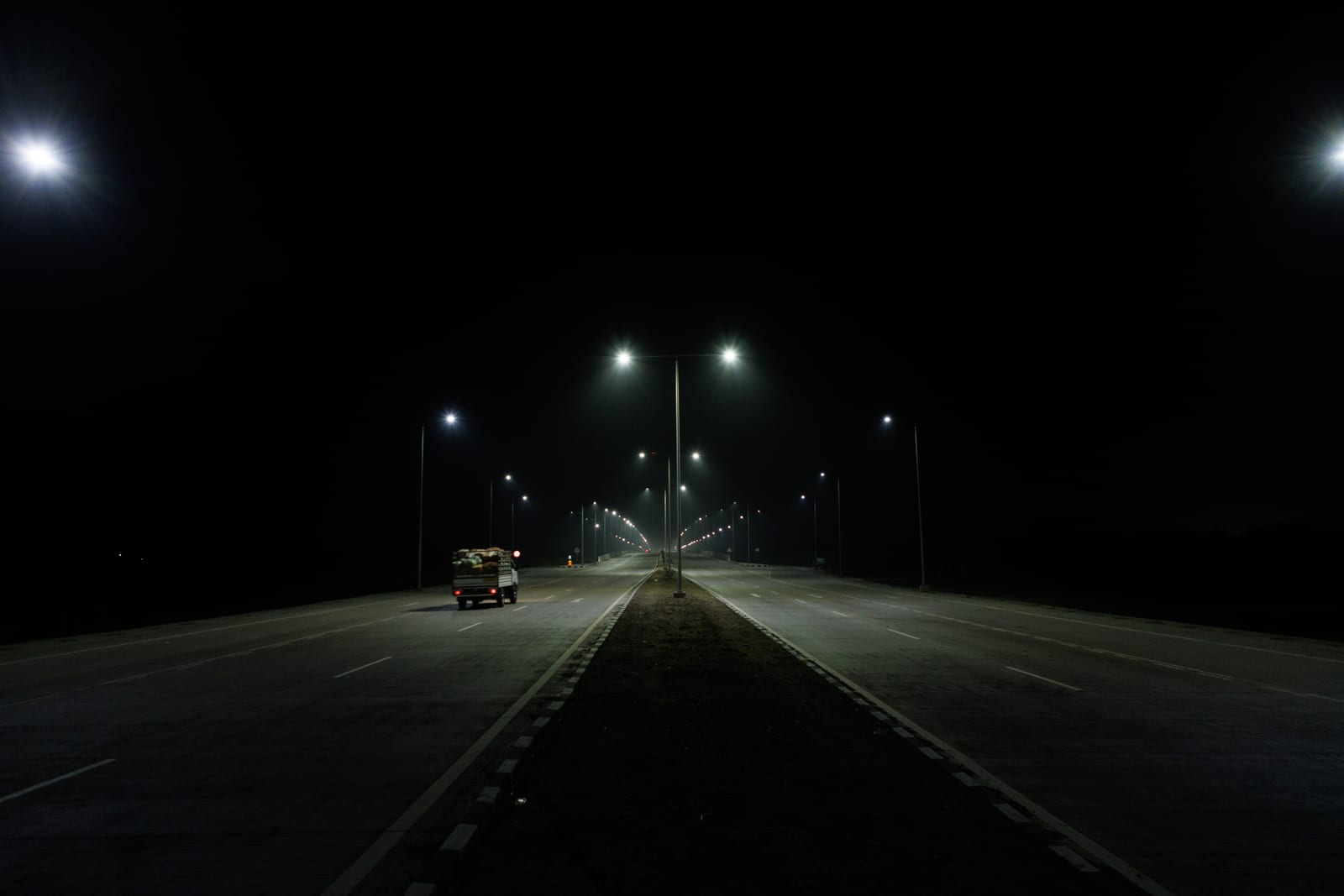
Outdoor lighting for highways, industrial campuses, ports, and large commercial sites runs for thousands of hours a year, so even small efficiency gains compound into major savings. Yet many installations still waste energy on outdated technology, poor design, and no controls. Engineering lighting properly cuts energy and maintenance cost while improving safety and visibility.
Here are the best practices that define an efficient, future-ready outdoor lighting system.
1. The LED Transition
LED luminaires consume far less energy than legacy HPS or metal-halide fixtures, last several times longer, and offer better light quality and instant switching. For any large installation still running legacy lamps, conversion is usually the single highest-return efficiency measure available.
2. Smart Controls
- Centralised management systems (CMS): monitor, dim, and schedule every pole remotely, and flag failures before they are reported.
- Adaptive dimming: reduce output during low-traffic hours on highways and campuses, saving energy without compromising safety.
- Motion and daylight sensing: trigger or dim lighting based on presence and ambient light.
3. Designing to the Right Levels
Good lighting is not about brightness, it is about the right illuminance and uniformity for the task and standard.
- Lux levels & uniformity: design to the applicable road or area lighting class so light is sufficient and evenly distributed, avoiding both dark patches and wasteful over-lighting.
- Pole spacing & optics: correct mounting height, spacing, and luminaire optics deliver coverage with fewer fixtures.
- Glare and light pollution: well-controlled optics improve safety and reduce spill light.
4. Solar & Hybrid Options
For remote highways and campuses, solar or solar-hybrid lighting removes trenching and cabling costs and cuts grid energy use. Battery sizing, autonomy for cloudy days, and quality components determine whether solar lighting performs reliably year-round.
5. The ROI Case
| Lever | Benefit |
|---|---|
| LED conversion | Large reduction in energy and lamp-replacement cost. |
| Smart dimming | Further energy savings during off-peak hours. |
| Remote management | Lower maintenance cost and faster fault response. |
| Solar hybrid | Reduced grid dependence and cabling cost in remote areas. |
Conclusion
Efficient outdoor lighting combines the right technology, smart controls, and sound photometric design, delivering safety and savings together.
Volcur designs and executes large-scale outdoor and highway lighting systems engineered for efficiency.
Frequently asked questions
How much energy can LED outdoor lighting save?
Converting from legacy HPS or metal-halide to LED typically cuts lighting energy substantially, and adaptive dimming controls add further savings on top.
Are smart lighting controls worth it for highways?
Yes. Remote management lowers maintenance cost and speeds fault response, while adaptive dimming saves energy during low-traffic hours without compromising safety.
When does solar outdoor lighting make sense?
Solar and solar-hybrid lighting is most attractive on remote stretches where grid cabling is costly, provided the system is properly sized for local conditions and autonomy.