O&M
Thermal imaging audits for high-voltage switchyards
What causes hot spots, how infrared surveys work, the delta-T criteria, and how thermography fits into substation O&M.
Volcur Engineering
5 min read
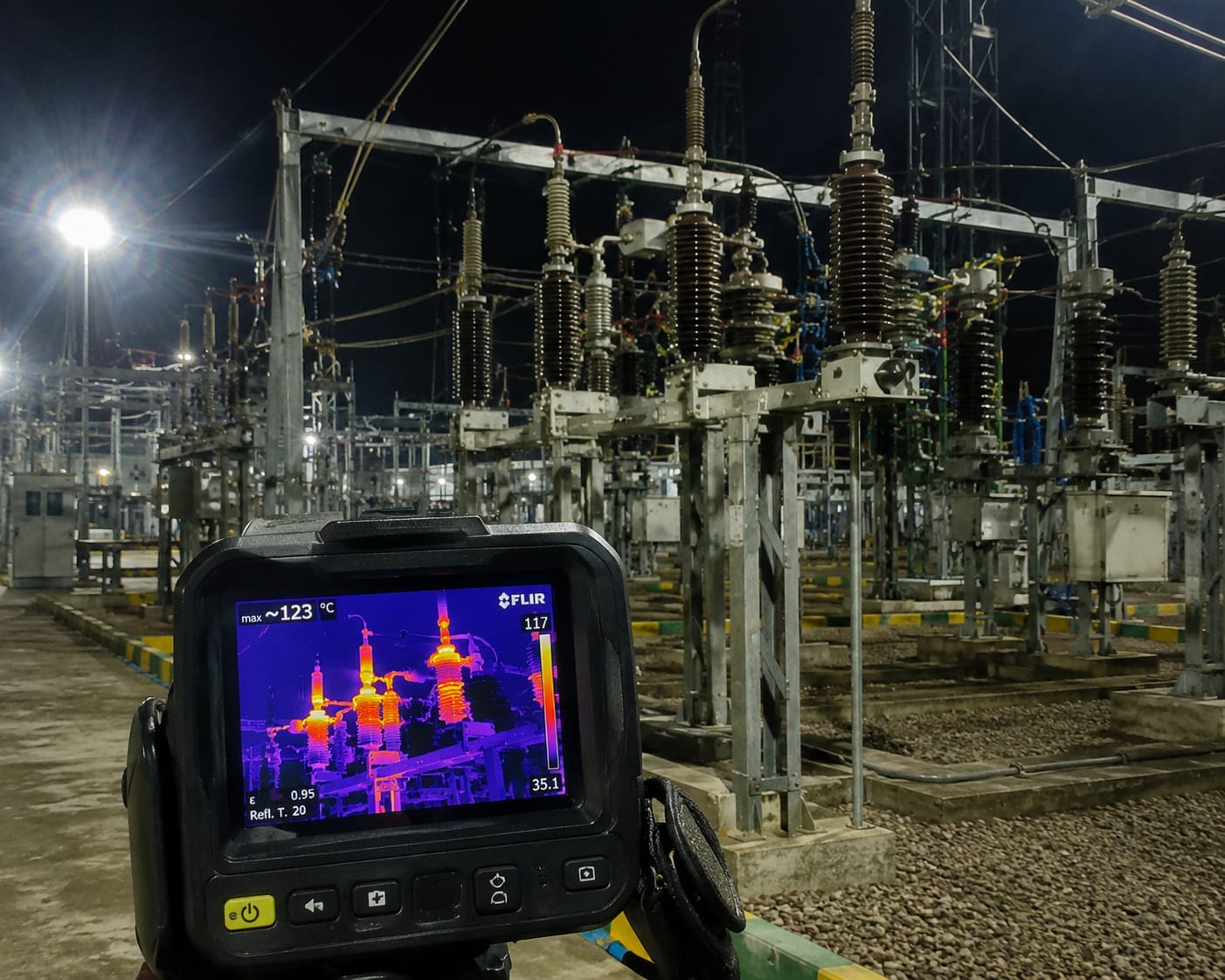
In a high-voltage switchyard, the warning sign of a developing failure is almost always heat. A loose connection, an overloaded conductor, or a degrading joint runs hotter than its neighbours long before it fails, and that heat is invisible to the eye but obvious to an infrared camera. Thermal imaging audits turn this principle into one of the most cost-effective predictive maintenance tools available.
This article explains how thermography works in a switchyard and how to get reliable, actionable results.
1. Why Heat Is the Early Warning
Electrical resistance at a poor connection or in an overloaded component dissipates energy as heat. Because the temperature rise grows with the square of the current, a small problem at light load can become a serious one at full load, which is exactly why catching it early matters.
2. What Causes Hot Spots
- Loose or corroded connections: increased resistance at joints, clamps, and terminals, the most common finding.
- Overloading: conductors or equipment carrying more than their rating.
- Load imbalance: uneven phase loading overheating one phase.
- Component degradation: ageing bushings, breakers, or insulators developing internal faults.
3. How an IR Audit Works
- Survey under load: scanning is most meaningful when equipment is carrying significant, representative load.
- Calibrated cameras & trained thermographers: accurate temperature measurement needs correct emissivity, distance, and interpretation.
- Delta-T criteria: findings are graded by the temperature difference (Delta-T) above a reference, ambient or a similar component, to prioritise action.
4. Standards, Grading & Frequency
| Severity (by Delta-T) | Typical Action |
|---|---|
| Minor | Monitor and re-check at next survey. |
| Intermediate | Plan repair at the next convenient outage. |
| Serious | Schedule prompt corrective action. |
| Critical | Act immediately to avoid failure. |
Surveys are typically conducted on a periodic schedule, and after significant changes, with severity grading driving the repair priority.
5. Integrating Thermography into O&M
Thermal imaging is most valuable as a routine part of a predictive maintenance programme, trended over time and combined with other techniques such as DGA and visual inspection. A one-off scan finds today's hot spots; a programme catches problems as they develop.
Conclusion
Thermal imaging turns invisible heat into an early-warning system, catching switchyard faults before they cause outages, at a fraction of the cost of failure.
Volcur provides infrared thermography audits as part of comprehensive predictive maintenance.
Frequently asked questions
Why scan a switchyard under load?
Heat from a high-resistance or overloaded component rises with current, so a meaningful infrared survey needs the equipment carrying significant, representative load to reveal the problem.
What is delta-T in a thermal audit?
Delta-T is the temperature difference between a hot spot and a reference (ambient or a similar component). It is used to grade severity and prioritise corrective action.
How often should thermal imaging audits be done?
Typically on a periodic schedule and after significant changes, ideally as part of an ongoing predictive maintenance programme rather than a one-off check.