Industry
Custom electrical panels for hazardous industrial environments
Area classification, Ex ratings, IP and IK protection and arc-flash design: what a safe custom panel for a hazardous area needs.
Volcur Engineering
6 min read
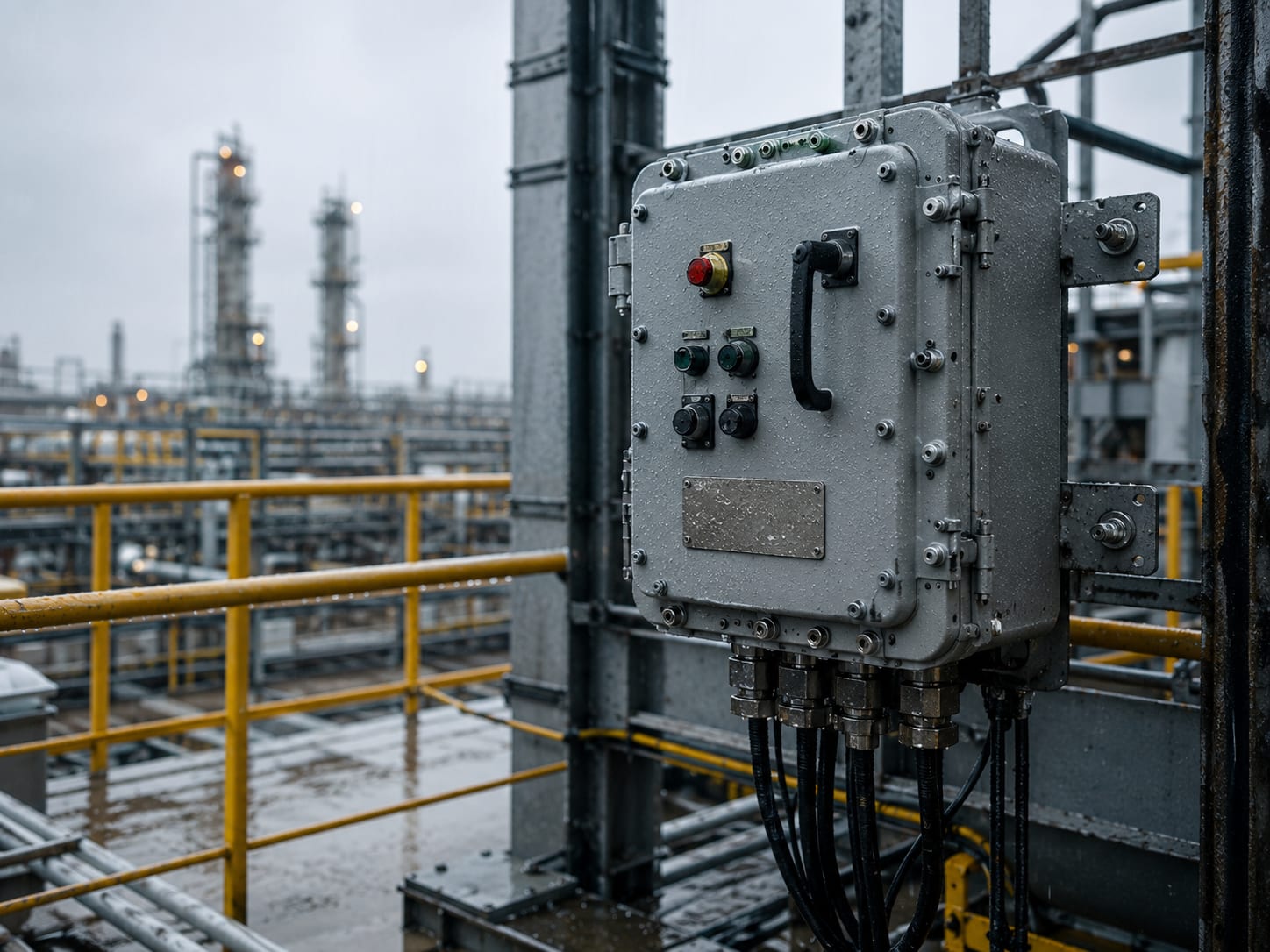
In refineries, chemical plants, paint shops, and grain or sugar facilities, the atmosphere itself can be flammable or explosive. A standard electrical panel in such an environment is not just non-compliant, it is a potential ignition source for a catastrophic event. Custom panel design for hazardous areas is a specialised engineering discipline where safety, standards, and process knowledge intersect.
This article explains what makes a panel "hazardous-area ready" and the design decisions behind it.
Why off-the-shelf panels fall short
Hazardous environments impose requirements ordinary panels never face: explosion containment, ingress protection against dust and corrosive vapours, thermal management in high ambient temperatures, and strict short-circuit and arc-flash withstand. Custom design lets every parameter be matched to the actual process and atmosphere.
Hazardous area classification
Design starts with how the area is classified, by the type of hazard and how often it is present.
- Zones: gas and dust atmospheres are graded by likelihood of an explosive mixture being present, which dictates the equipment protection level required.
- Protection concepts: enclosures may be flameproof (Ex d), increased-safety (Ex e), purged/pressurised (Ex p), or intrinsically safe (Ex i) depending on the zone.
- Standards: equipment is certified to IECEx / ATEX internationally and the relevant Indian standards domestically.
Enclosure & ingress protection
- IP rating: protects against dust and water ingress appropriate to the environment.
- Material selection: stainless steel or specially coated enclosures resist corrosive chemical atmospheres.
- Thermal design: cooling, heaters, or ventilation keep internal temperatures within safe limits.
Electrical design for safety
| Panel Type | Role |
|---|---|
| PCC (Power Control Centre) | Distributes incoming power to major loads and feeders. |
| MCC (Motor Control Centre) | Controls and protects banks of motors. |
| APFC | Automatic power-factor correction to avoid penalties. |
| PLC / automation | Process control, interlocks, and monitoring. |
- Short-circuit withstand: busbars and devices are rated to survive fault currents without rupture.
- Arc-flash mitigation: compartmentalisation, arc-resistant construction, and protection settings reduce arc-flash energy and protect operators.
Compliance & documentation
Hazardous-area panels must carry the correct certifications, documented type tests, and clear labelling, and they fall under statutory inspection. Proper documentation is part of the deliverable, not an afterthought.
Conclusion
In hazardous environments, the electrical panel is a safety-critical asset. Custom design ensures it protects people and process while meeting every applicable standard, so panel selection and certification belong with a specialist in hazardous-area equipment.
Volcur is a Rajkot-based turnkey high-voltage EPC working across Gujarat: it builds and maintains substations, transmission lines, and large-scale lighting, and handles solar power evacuation and substation operation and maintenance. Volcur delivers the high-voltage supply backbone that an industrial plant connects into, rather than manufacturing the in-plant control panels themselves.
Frequently asked questions
What is hazardous area classification?
It is the formal assessment of where explosive gas or dust atmospheres may occur and how often, which determines the protection level and certification electrical equipment in that area must have.
What does an Ex rating mean on a panel?
An Ex rating indicates the explosion-protection concept and certification of equipment, such as flameproof (Ex d) or intrinsically safe (Ex i), suitable for a given hazardous zone.
Why design a custom panel instead of buying standard?
Custom design matches enclosure protection, thermal management, short-circuit rating, and certifications precisely to the process and atmosphere, something standard panels cannot guarantee in hazardous areas.