Industry
How power quality audits save industries from penalties
Harmonics, power factor and voltage sags: what a power quality audit checks, and the fixes that cut penalties and downtime.
Volcur Engineering
6 min read
Poor power quality is an invisible tax on industry. Harmonics overheat transformers and cables, a low power factor draws utility penalties, and voltage sags trip sensitive equipment and scrap production runs, yet most of these costs go undiagnosed because the symptoms are blamed on "random" faults. A power quality audit puts numbers to the problem and, crucially, to the savings available from fixing it.
This article explains what a power quality audit examines and why it so often pays for itself many times over.
1. What "Power Quality" Actually Means
Power quality describes how closely the voltage and current waveforms match the clean, stable sine wave equipment expects. Deviations, such as distortion, imbalance, dips, and swells, cause inefficiency, heating, malfunction, and penalties.
2. The Common Culprits
| Problem | Consequence |
|---|---|
| Harmonics (from VFDs, rectifiers) | Overheating of transformers/cables, nuisance tripping, and added losses. |
| Low power factor | Direct utility penalties and wasted transformer capacity. |
| Voltage sags & swells | Tripped PLCs and drives, scrapped batches, restart losses. |
| Unbalanced loads | Motor overheating and reduced equipment life. |
3. The Audit Process
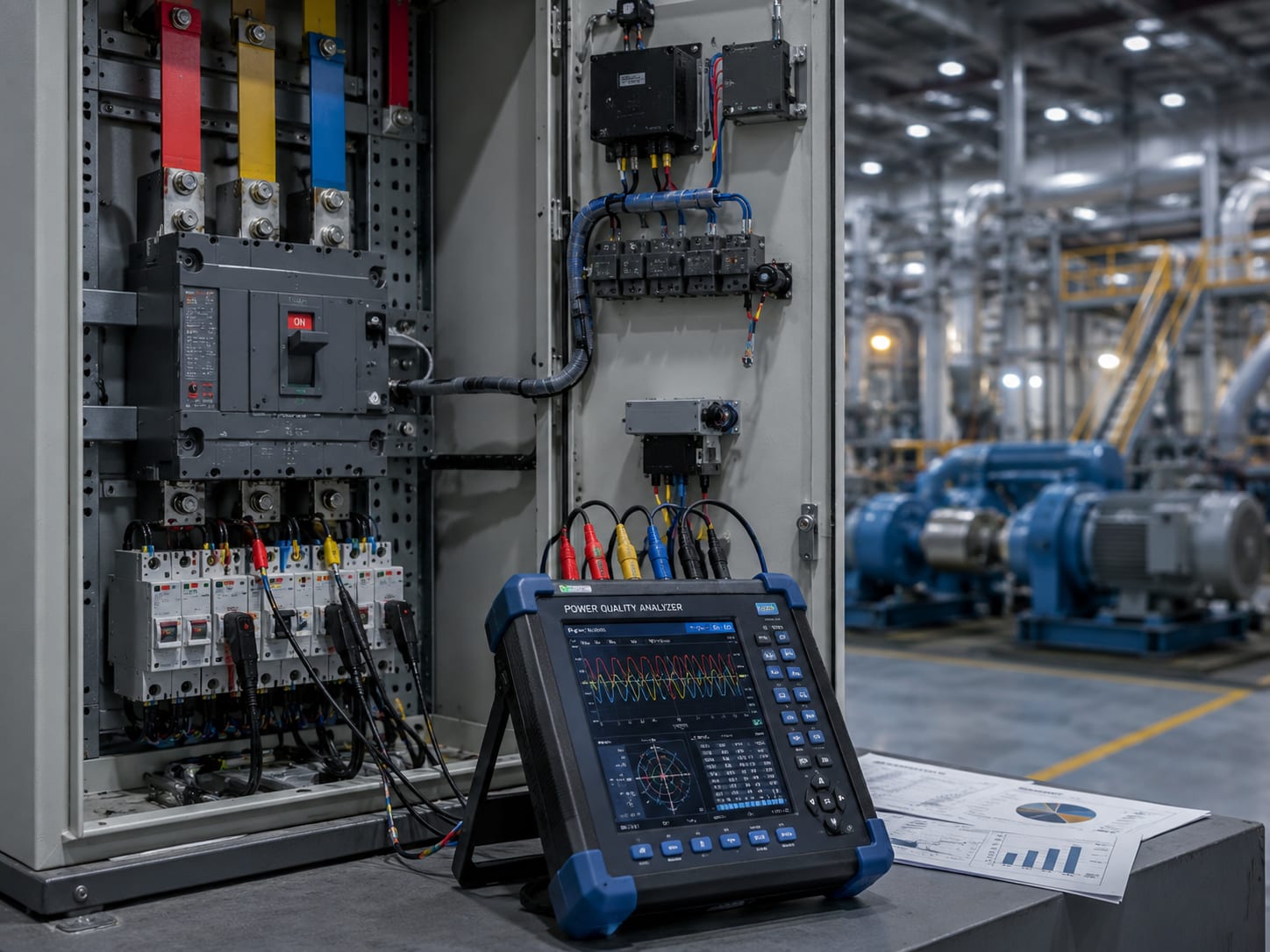
- Measurement: power-quality analysers log voltage, current, harmonics, PF, and events at key points over a representative period.
- Analysis: data is compared against limits such as the IEEE 519 harmonic guidelines and utility PF requirements to pinpoint problems and their sources.
- Reporting: the audit quantifies penalties, losses, and risks, and recommends prioritised, costed solutions.
4. Proven Solutions
- Power factor correction: APFC panels eliminate PF penalties and free up capacity.
- Harmonic filters: active or passive filters bring harmonic distortion within limits.
- Voltage support: AVRs, UPS, or storage protect sensitive processes from sags.
5. The ROI
Because power quality problems show up as recurring monthly penalties, scrapped production, and shortened equipment life, the mitigation measures often pay back within months and keep saving for years. The audit itself is a small fraction of the savings it typically unlocks.
Conclusion
A power quality audit converts invisible, recurring losses into a clear, costed action plan, usually with a fast and lasting return. Where audits call for upgraded supply infrastructure, a turnkey high-voltage EPC such as Volcur can deliver the substations, transmission lines and grid connections that a stronger, more reliable supply depends on.
Frequently asked questions
What is a power quality audit?
It is a structured measurement and analysis of a facility's voltage and current, covering harmonics, power factor, sags, and imbalance, against applicable limits, with costed recommendations to fix any problems found.
What is IEEE 519?
IEEE 519 is a widely used standard that sets recommended limits for harmonic distortion at the point of common coupling, used as a benchmark in power-quality audits.
How quickly does power-quality mitigation pay back?
Because it removes recurring penalties and production losses, mitigation such as PF correction and harmonic filtering often pays back within months.