Substations
How to design a high-voltage substation for a large industrial plant
Load assessment, AIS vs GIS and SF6-free, redundancy, CEA compliance and SCADA: the engineering phases behind a robust industrial substation.
Volcur Engineering
8 min read
Key takeaways
- Right-size, don't over-size: design around coincident peak demand and a 10-year load runway, not nameplate ratings.
- AIS vs GIS is now a three-way decision: conventional GIS, air-insulated, and fast-emerging SF6-free switchgear all deserve evaluation.
- Redundancy is non-negotiable: N+1 transformer and feeder configurations keep critical loads alive during faults and maintenance.
- Compliance is the gate: CEA Technical Standards and Safety Regulations dictate clearances, earthing, and fire protection.
For large-scale manufacturing facilities, chemical processors, steel mills, and integrated industrial parks, electricity is not just a utility, it is the lifeblood of daily operations. When a plant draws tens of megawatts, tapping standard medium-voltage feeders from the local utility grid is rarely sufficient or economical. Heavy industries instead require a dedicated high-voltage (HV) substation design that steps down transmission-level voltages into safe, stable, plant-level power.
A poorly engineered substation creates compounding operational risk: voltage dips that trip sensitive PLCs and damage machinery, harmonic distortion that draws utility penalties, and worst case, a full plant blackout that can cost lakhs of rupees per hour in lost production. This guide breaks down the essential engineering phases of a robust, future-proof industrial substation installation, the same framework Volcur applies on turnkey projects across India.
1. Precise Load Assessment & Future Expansion Mapping
Every high-voltage substation design begins with a rigorous load study. Under-sizing leads to nuisance trips and chronic transformer overheating; over-sizing locks up capital in idle iron. The goal is a layout matched to how the plant actually behaves, and to where it is headed.
- Coincident peak demand: Calculate total connected load against a realistic diversity factor to find the genuine maximum the facility will draw at any instant, rather than summing nameplate ratings.
- Power-factor and harmonics: Large inductive loads such as motors and arc furnaces drag down power factor, while VFDs and rectifiers inject harmonics. Budget for capacitor banks, static VAr compensators (SVCs), or active filters to avoid penalties and protect equipment.
- The 10-year runway: Leave physical room for an additional bay or a second transformer so capacity can scale by adding a bay, not by rebuilding the yard.
2. Choosing the Right Infrastructure: AIS, GIS & SF6-Free Options
The switchgear technology decision is one of the most consequential. What was once a simple AIS-versus-GIS choice is now three-way, because sustainable, SF6-free equipment has matured rapidly.
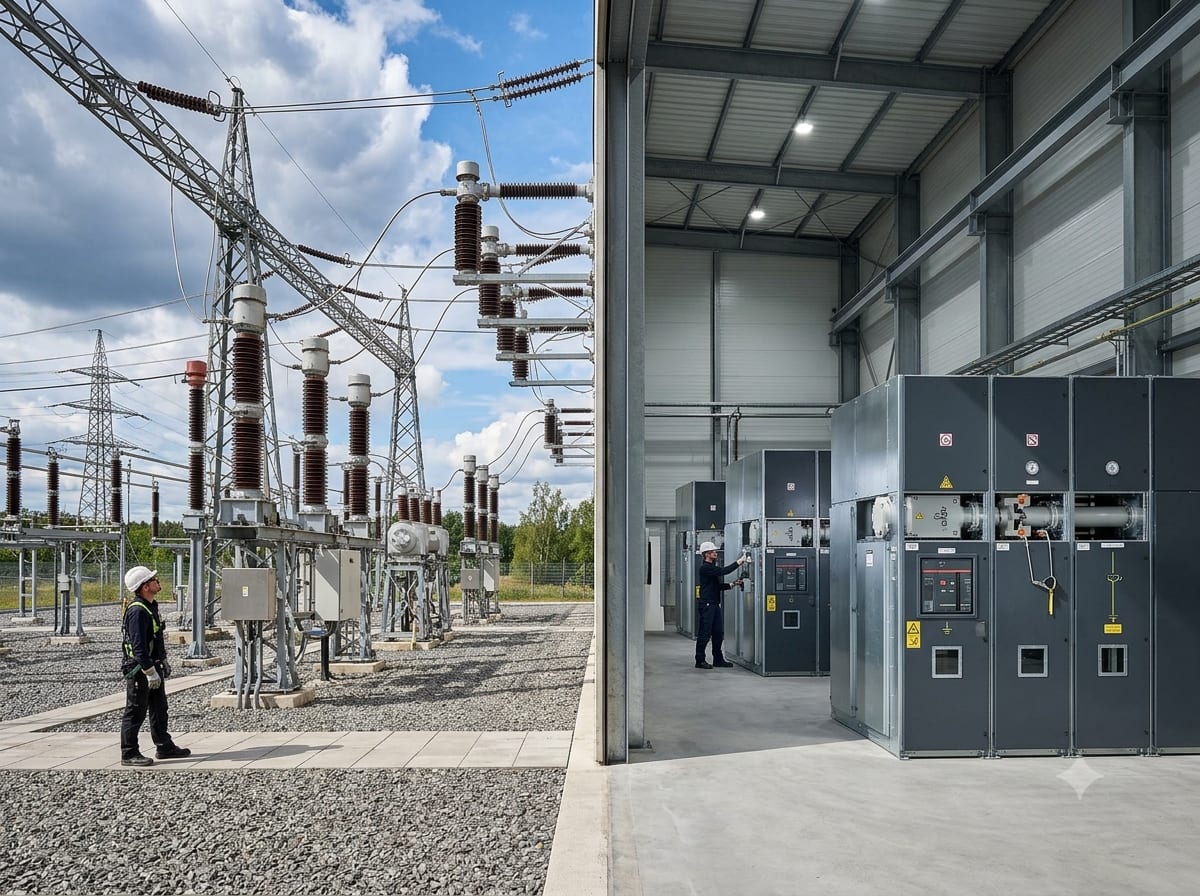
Air-Insulated Substations (AIS)
- Pros: lower initial CapEx and easily accessible components for routine maintenance.
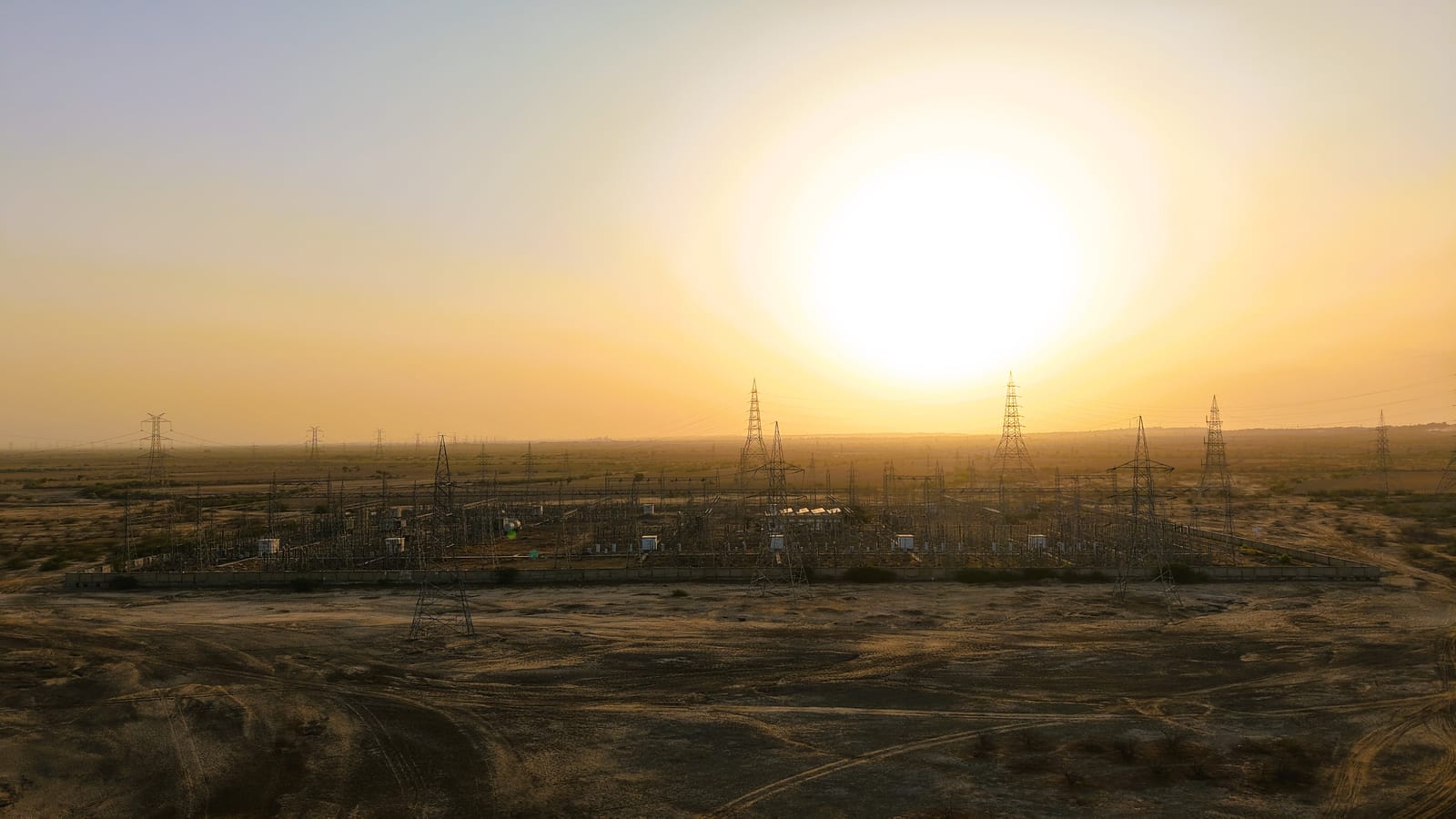
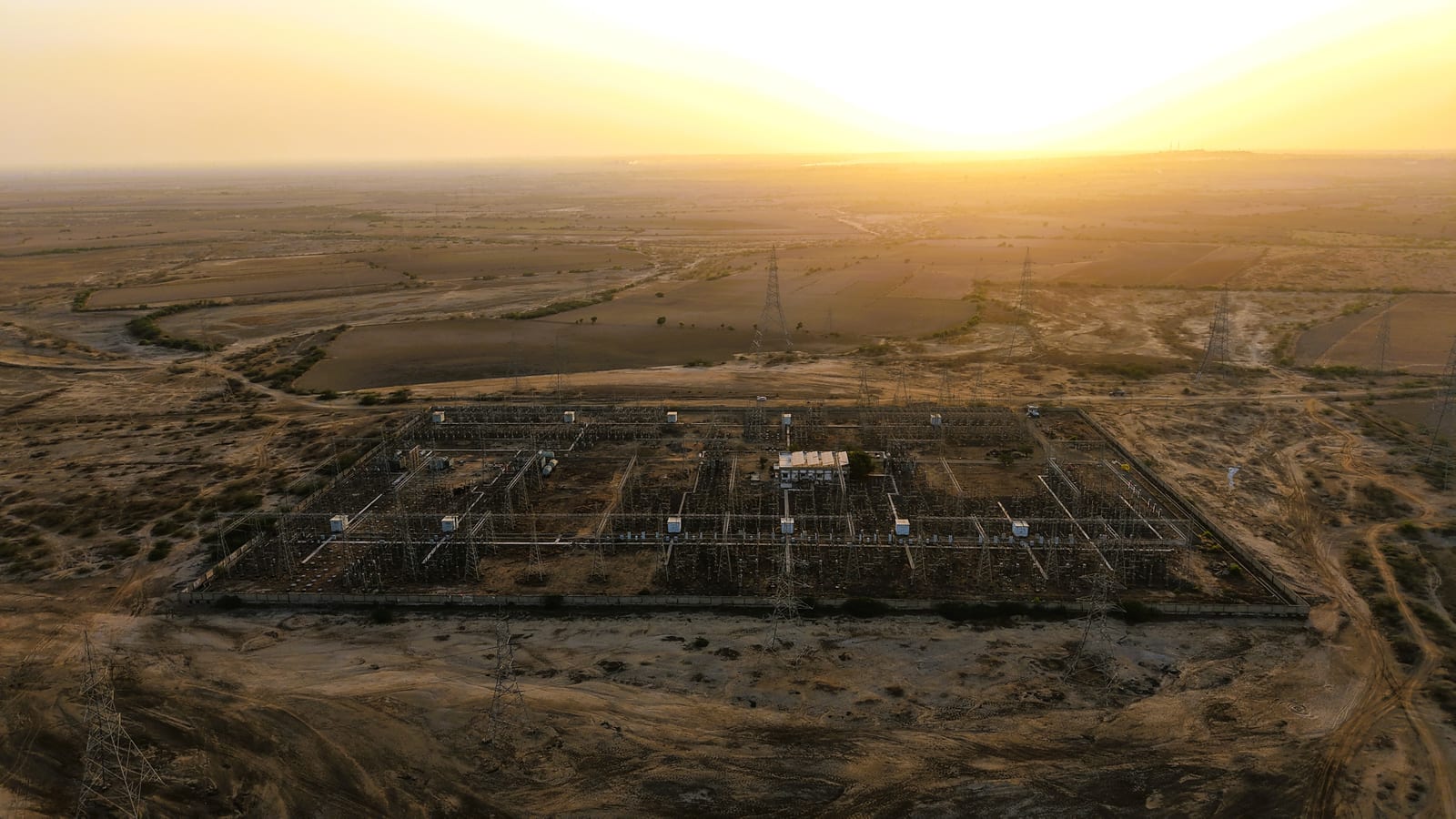
- Cons: a large land footprint, with components exposed to dust, fumes, and coastal moisture.
Gas-Insulated Substations (GIS)
- Pros: up to 70% smaller footprint, full protection from pollution, minimal maintenance, ideal for constrained or harsh sites.
- Cons: higher upfront cost, and for SF6-filled units, a gas with very high global warming potential now under regulatory and ESG scrutiny.
SF6-Free Switchgear (the rising third option)
Manufacturers have moved SF6-free technology from concept to commercial reality, using clean-air insulation with vacuum switching, or fluoronitrile-based gas mixtures. For most Indian industrial projects the pragmatic path is to specify SF6-free where it is mature and cost-justified, and proven sealed-for-life GIS elsewhere.
3. Core Component Selection & Redundancy Planning
An industrial substation is only as reliable as its weakest component. High-performance designs enforce redundancy (N+1, and N+2 for the most critical processes) across primary machinery.
| Component | Strategic Design Function |
|---|---|
| Power Transformers | Steps incoming voltage (e.g. 66/132 kV) down to plant distribution levels (e.g. 11 kV). A redundant unit carries critical load when one is offline. |
| Circuit Breakers & Disconnectors | VCBs or SF6 / SF6-free breakers isolate faults within milliseconds, stopping a short circuit from cascading upstream. |
| Instrument Transformers (CTs & PTs) | Specified to IEC 61869, they scale currents and voltages down so meters and relays can monitor grid health accurately. |
| Busbars & Isolators | Route power between bays. A double-busbar or bus-coupler scheme adds switching flexibility for maintenance without a full shutdown. |
4. Safety Spacing, Earthing & CEA Compliance
In India, HV infrastructure must comply with the CEA (Technical Standards for Construction of Electrical Plants and Electric Lines) Regulations and the CEA (Measures relating to Safety and Electric Supply) Regulations, alongside state and IS/IEC codes. Recent CEA amendments have tightened clearance and right-of-way norms, so designing to the current edition is essential to clear utility inspection on the first attempt.
- Earthing grid design: A buried copper or GI earthing mesh holds step-and-touch potentials within safe limits during a fault and channels lightning and short-circuit energy into the ground.
- Clearance and spacing: Guarantee minimum clearances between phases, and between live parts and earthed structures, to prevent flashover.
- Fire mitigation: Use nitrogen-injection fire protection (NIFPS), blast walls between transformer bays, and oil soak pits to contain leaks.
5. Control Room Architecture: SCADA & Automation
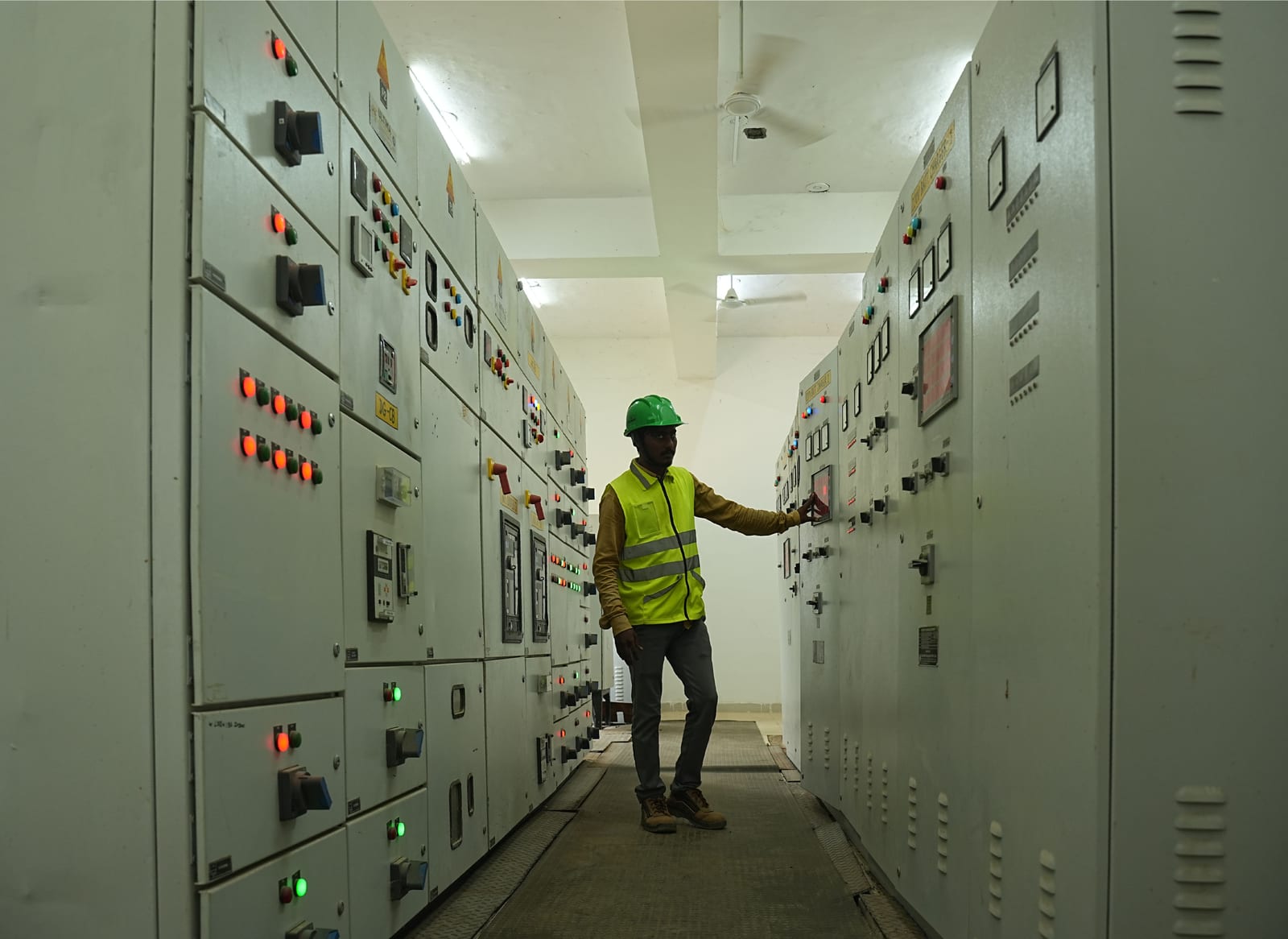
Modern plants cannot rely on manual switchgear operation. The control building turns a yard of equipment into a monitored, self-protecting system.
- Numerical protection relays: Intelligent electronic devices (IEDs) detect anomalies in milliseconds and execute trip logic before damage propagates.
- SCADA integration: Operators monitor real-time power quality, log faults, and switch breakers safely from a remote room, with the cyber-security measures current CEA guidance expects.
Conclusion
Designing a high-voltage substation demands a flawless blend of electrical engineering, civil planning, logistics, and regulatory mastery. For an expanding enterprise, getting this right dictates operational reliability for the next thirty years.
At Volcur, we deliver end-to-end, turnkey industrial electrification, from site survey and civil design through procurement, installation, and final utility commissioning.
Frequently asked questions
What voltage level counts as a high-voltage substation for an industrial plant?
For Indian heavy industry, dedicated substations typically take supply at 33 kV, 66 kV, or 132 kV and step it down to 11 kV for in-plant distribution. The right level depends on sanctioned load, the utility's available feeder voltage, and growth plans.
Should an industrial plant choose AIS or GIS?
GIS suits space-constrained, polluted, or coastal sites and needs less maintenance at a higher cost. AIS is cheaper and easy to maintain but needs more land. SF6-free GIS is a growing third option where sustainability targets matter.
How long does it take to design and commission an industrial substation?
A turnkey HV substation commonly runs several months from load study to energisation. Long-lead items such as power transformers usually drive the critical path, so early procurement is key.