Transmission
Five critical challenges in HT transmission line construction
Right-of-way, terrain and foundations, conductor selection, weather logistics and live-line safety, and how to manage each.
Volcur Engineering
7 min read
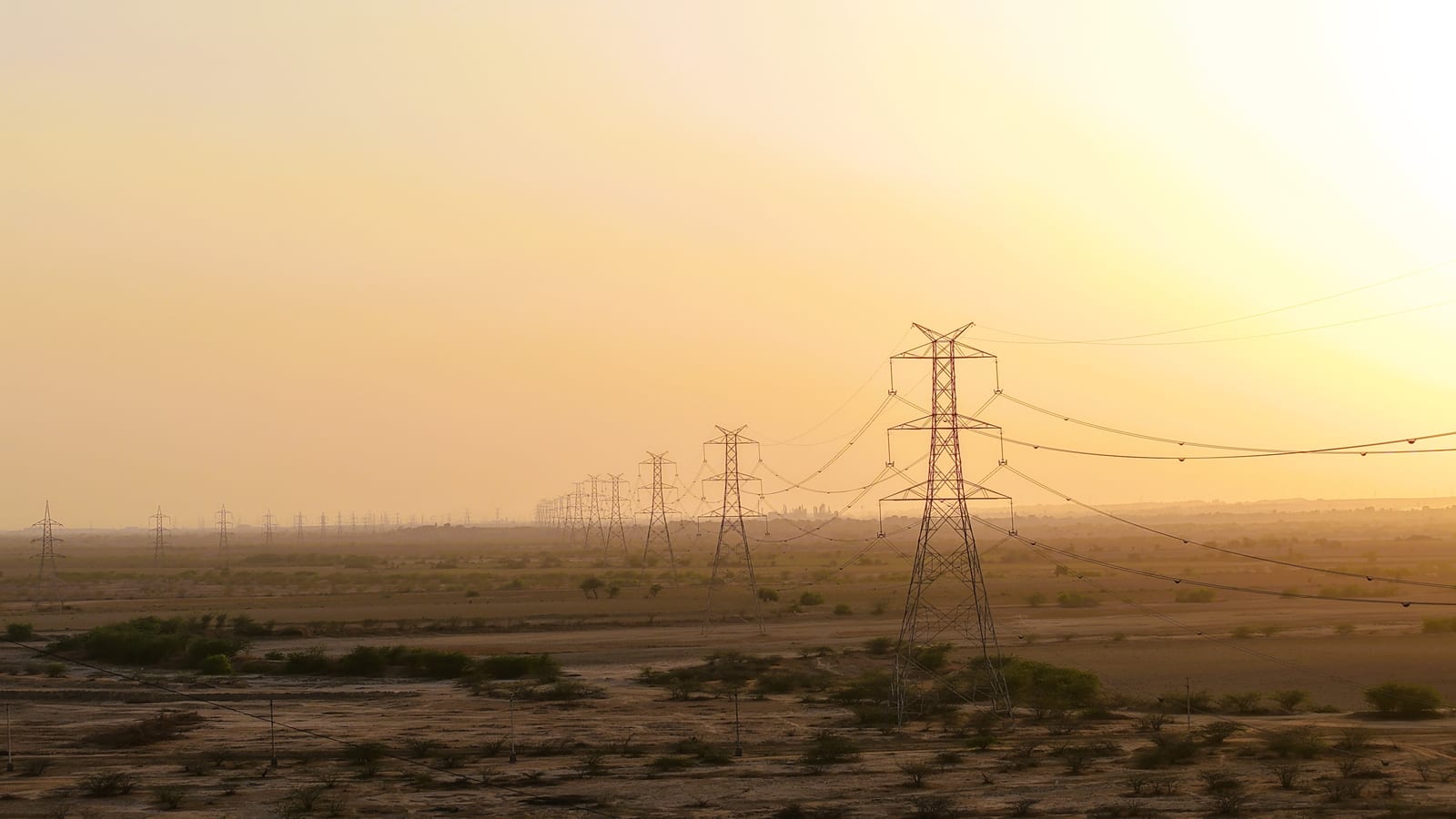
Building a high-tension transmission line looks deceptively simple on a map: a straight run of towers from point A to point B. In reality, HT line construction is one of the most logistically and technically demanding activities in power infrastructure, where a single overlooked factor can stall a project for months and inflate budgets sharply.
Here are the five challenges that most often derail HT transmission projects, and the engineering and planning disciplines that keep them on track.
1. Right-of-Way (RoW) Acquisition & Forest Clearances
Securing a continuous corridor across private, government, and forest land is frequently the single largest source of delay. Compensation disputes, route re-alignments, and statutory forest and wildlife clearances can each add months. India's CEA right-of-way norms specify different corridor widths for normal routes, forest areas, urban and populated zones, and substation approach sections across voltage classes, so early route surveys and stakeholder engagement are essential.
- Mitigation: detailed route optimisation, early statutory applications, transparent compensation, and contingency re-routes.
2. Difficult Terrain & Tower Foundation Engineering
Lines cross rivers, ridges, marshland, and farmland, and each soil condition demands a different foundation. The wrong foundation design risks tower tilting or collapse under load and wind.
- Soil-specific foundations: from simple pad-and-chimney in firm soil to pile foundations in soft or waterlogged ground and rock-anchored designs on hills.
- Special crossings: river and railway crossings need taller towers, longer spans, and extra clearance engineering.
3. Conductor Selection, Sag & Tension
The conductor must carry the design current without overheating, while sag and tension stay within safe clearance limits across temperature extremes. Modern projects increasingly specify high-performance conductors, such as ACSS, GAP-type, and composite-core (CFCC) designs, that carry more current with less sag, raising capacity within the same corridor.
- Sag-tension calculations: done for maximum temperature and ice/wind loads to guarantee statutory ground clearance.
4. Weather Windows & Logistics
Monsoon, extreme heat, and remote access all compress the workable calendar. Transporting towers, conductors, and cranes to roadless stretches is a project in itself.
- Mitigation: sequence stringing and erection around weather windows, pre-position materials, and plan access roads early.
5. Safety & Outage Coordination
Working at height, near or on live circuits, and coordinating shutdowns with the grid operator carry serious risk. Disciplined permit-to-work systems, earthing of de-energised lines, and trained crews are non-negotiable.
- Live-line and outage management: coordinate with the load dispatch centre to minimise downtime and never compromise on isolation and earthing.
Conclusion
HT transmission line construction rewards meticulous upfront planning, of route, foundations, conductors, weather, and safety, far more than on-site improvisation.
Volcur delivers turnkey HT line construction with in-house survey, design, and execution capability.
Frequently asked questions
What is right-of-way (RoW) in transmission lines?
RoW is the legally secured land corridor along the line route within which towers are erected and conductors strung, with clearances kept free of obstructions. Width depends on voltage and terrain per CEA norms.
What are HTLS conductors?
High-Temperature Low-Sag conductors carry more current at higher temperatures with less sag than conventional ACSR, letting utilities raise capacity within the same corridor, useful where RoW is hard to expand.
How long does HT line construction take?
Timelines vary widely with length, terrain, and RoW complexity, from a few months for short, simple lines to over a year when forest clearances and difficult crossings are involved.